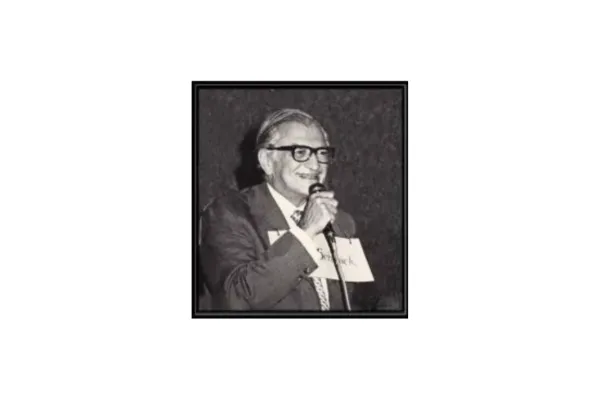
Medicine in the "Good Old Days"
My dad, Dr. Lou Schopick, always thought of himself as a salt-of-the-earth kind of guy. In a French restaurant, he would ask the waiter for “beef stew.” (My Mom, who spoke French, would hint that he might want to say it the French way: boeuf bourguignon.)
His language was also pretty salty, especially when talking about his fellow doctors, whom he didn’t always admire. Since he was our Dad — and to us, NOT the wonderful doctor his patients adored — I didn’t always listen to the things he said about the medical profession. Now, I wish I had listened.
It was the 1950s and 1960s, known now as the “Good Old Days,” and the era of medical specialization was just beginning. He told me that his fellow doctors used to make fun of him for opting NOT to choose a specialty. He loved general medicine, with its patient contact. He loved his patients. But his colleagues said he was a fool not to cash in where the “big money” was.
But from what he could see, specialists left much to be desired. He was convinced that they were too narrowly focused, and therefore, couldn’t diagnose some of the simplest conditions. In fact, he was proud when the “big shots” would consult him about their difficult-to-diagnose patients, and he would come up with the correct diagnoses.
As an aside, watching Marcus Welby, MD on television with my dad always turned into a race — between Dr. Welby and my dad, to reach the correct diagnosis. My dad always won.
But he wasn’t a big fan of specialists for another reason: They didn’t look at the patient as a whole person. “One day,” he’d say, with more than a hint of disdain in his voice, “there’ll be a doctor of the big toe.”
I hate to admit it, but his prediction has almost come to pass.
Sometimes my Dad’s criticisms of the medical system went too far — or so we thought. One day, extremely discouraged with his profession, he told me: “I’ve seen surgeries performed on patients who didn’t need them, simply because the doctor wanted a new house [substitute ‘boat’ or ‘expensive car’].” He seemed very disheartened. I was a teenager, and thought he might have been kidding. Now, 40+ years later, I know he was quite serious.
I wish he were still here, so I could tell him I understand.
One day, he said, “Someone, or a group of someones, will come along to rein these guys in.” (When my Dad was angry, he used a stronger word to describe his colleagues than “these guys.” It started with a “b.”). “But those ‘someones,’” he told me, “will be worse than the doctors they’ll be reining in.”
My Dad foresaw Managed Care.
Now, whenever I hear of terrible things happening to patients at the hands of uncaring or incompetent doctors, or when I experienced these things firsthand while advocating for my husband between his brain tumor diagnosis in 1990 until his death in 2005, I think of my Dad.
I wish I could tell him that now I understand what he was trying to tell us.
